
MANHATTAN PARIS
Issue 2 – Paris – New York
Two-Tone Shoes
The Graphic Elegance of the Roaring Twenties
Black and white, sporty or sophisticated, two-tone shoes defined 1920s fashion. From golf courses to jazz clubs, they embodied the bold graphic elegance of the Roaring Twenties.
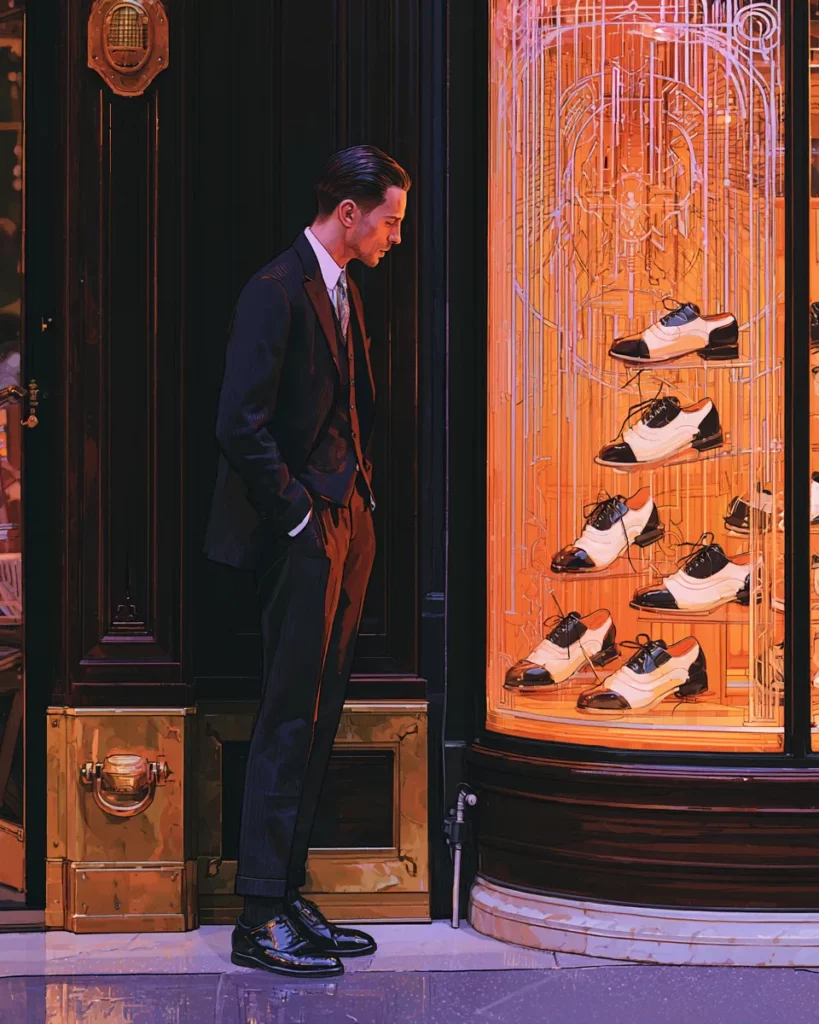
THE ACCESSORY THAT SET THE 1920s DANCING
In the 1920s, two-tone shoes became one of the defining signs of a generation in love with movement, dance and modernity. Most often combining white with black, brown or beige, they appealed both to elegant men and to women breaking free from older dress codes.
Two colors, a few perforations, and all the elegance of the Roaring Twenties at your feet.
01
When Shoes Step Out of the Shadows
At the beginning of the twentieth century, shoes still played a relatively discreet role in the female silhouette. Long dresses largely concealed them, while most available styles favored dark colors. Their purpose remained primarily practical: protecting the foot and completing an outfit without drawing much attention.
Fashion changed rapidly after the First World War. Skirts gradually became shorter, sometimes rising to the knee. For the first time, shoes were fully visible. No longer a minor detail hidden beneath clothing, they became a genuine element of style.
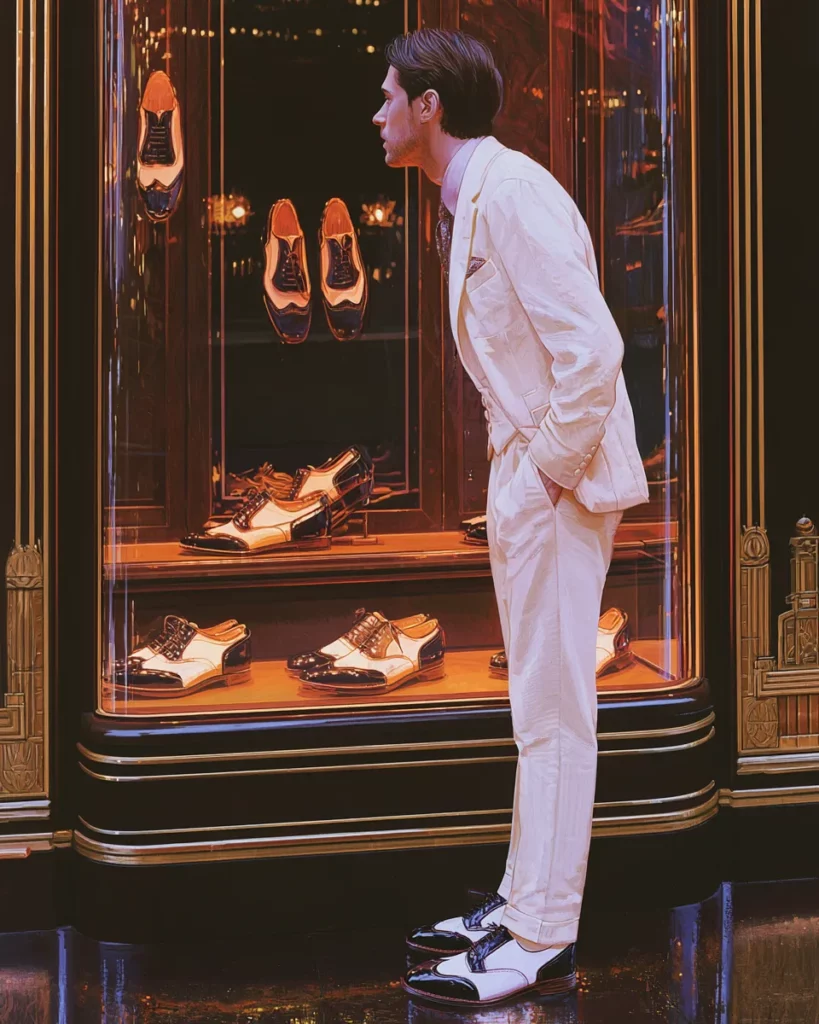
FASHION BECOMES VISIBLE
The spread of shorter dresses gave shoes a new importance. The Metropolitan Museum of Art notes that this change in silhouette, which began in the late 1910s, encouraged the emergence of a far wider range of styles and materials.
This transformation encouraged manufacturers and designers to multiply shapes, materials and contrasts. Patent leather, suede, canvas, kid leather and satin could now appear on the same shoe. Color also entered the shop windows.
An Instantly Recognizable Look
Among all these innovations, the two-tone shoe stood out for its instantly recognizable appearance. Alternating light and dark sections emphasized the construction of the shoe and drew the eye toward the feet. Shoes now accompanied every moment of the day: walking, sport, work, receptions or evenings on the dance floor. They had to match the outfit while also expressing the personality of the wearer.
The Birth of the “Spectator Shoe”
From the Playing Field to the City
The era’s most iconic two-tone style became known in the English-speaking world as the “spectator shoe.” It was characterized by two contrasting colors or materials across the upper.
Its development was closely tied to leisure activities enjoyed by affluent groups. First worn at cricket matches, golf games and fashionable outdoor gatherings, it quickly moved into the city. It appeared as an Oxford, Derby or pump, with contrasting panels emphasizing the toe, heel or quarters.
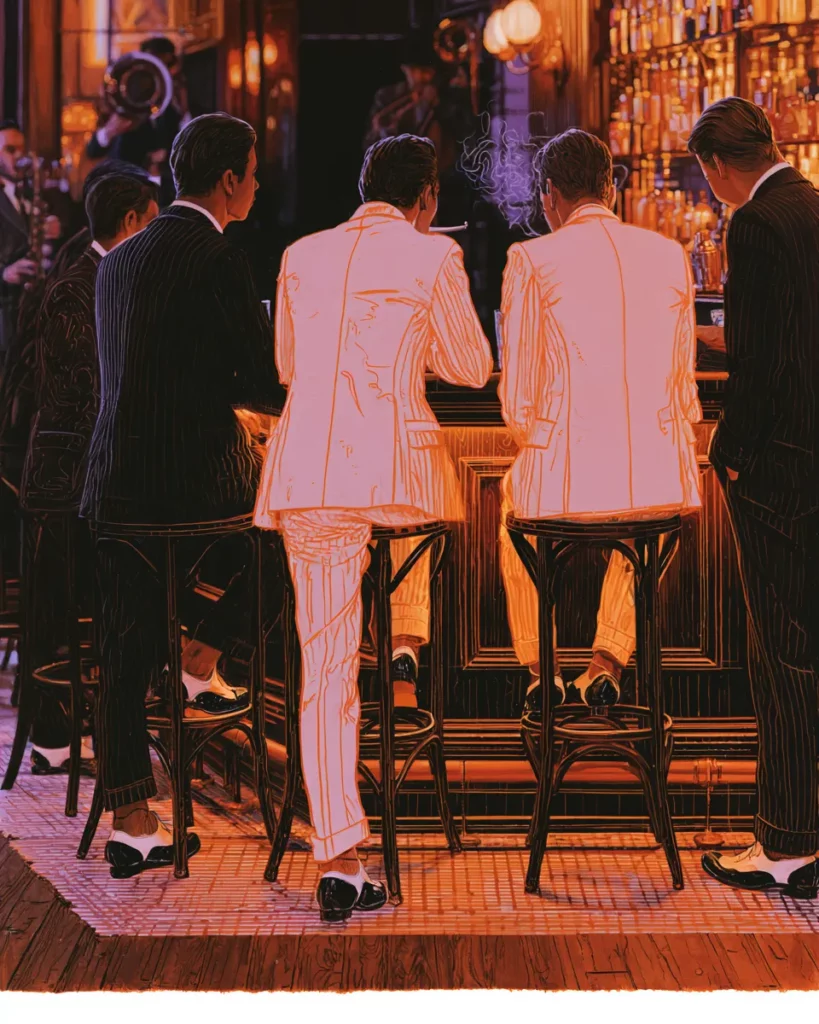
A Striking Form of Masculine Elegance
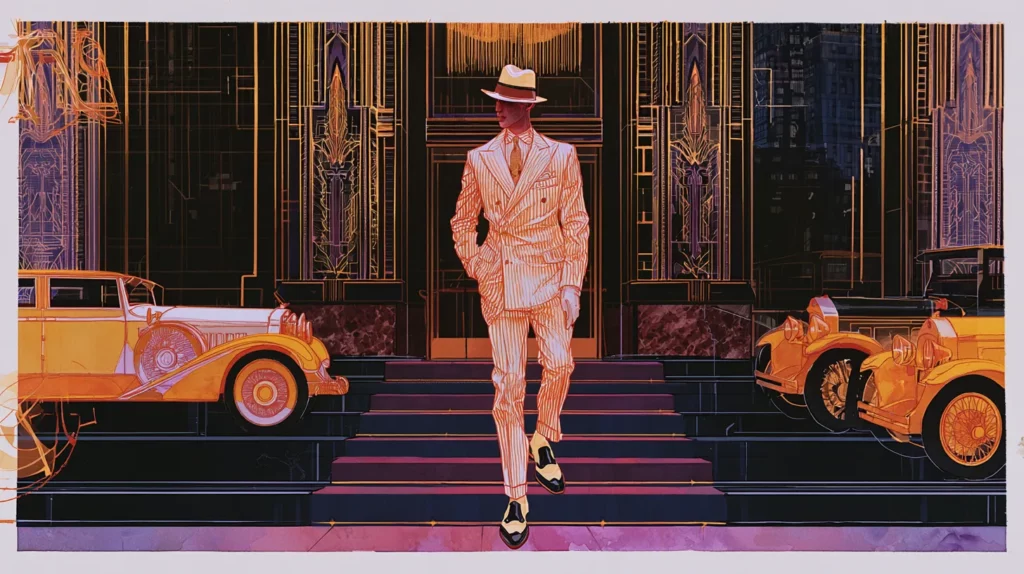
For men, two-tone shoes were initially associated with leisurewear and the summer season. They were worn with light trousers, a sports jacket or a lightweight suit. Their bold contrast gave them a more daring appearance than traditional black shoes.
At seaside resorts, private clubs and holiday destinations, they signaled a new taste for relaxed dressing without abandoning elegance. Black and white produced the most spectacular effect, while white and brown or beige and black were easier to wear.
Their conspicuous appearance was not universally admired. In more conservative circles, they were sometimes considered too eccentric. Paradoxically, that reputation helped make them popular with artists, dancers and young men eager to display a modern look.
Shoes Made for Dancing
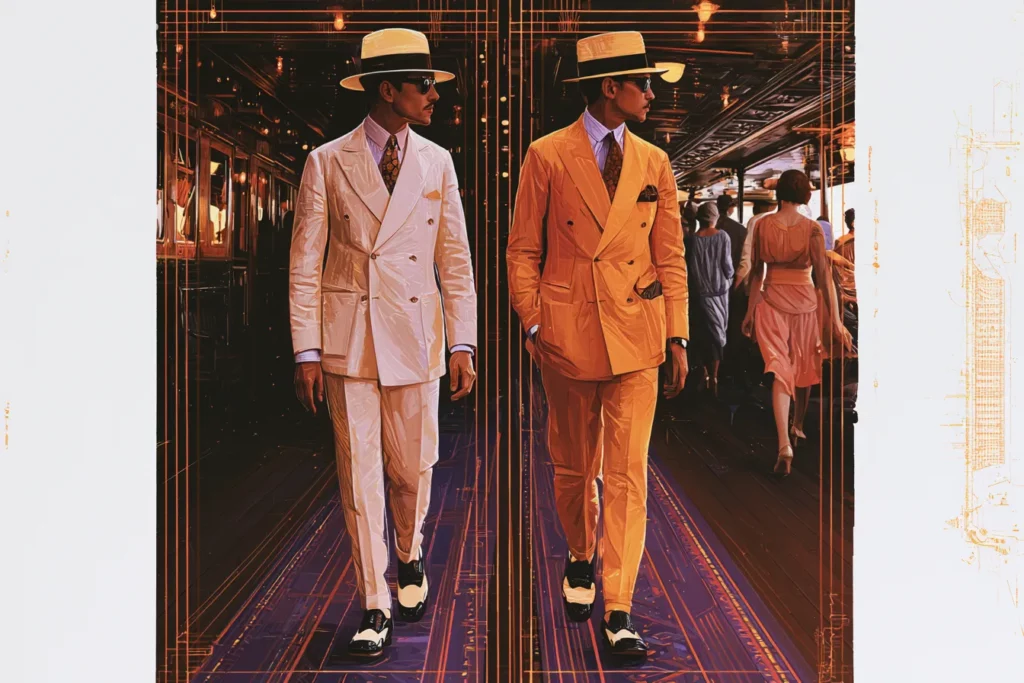
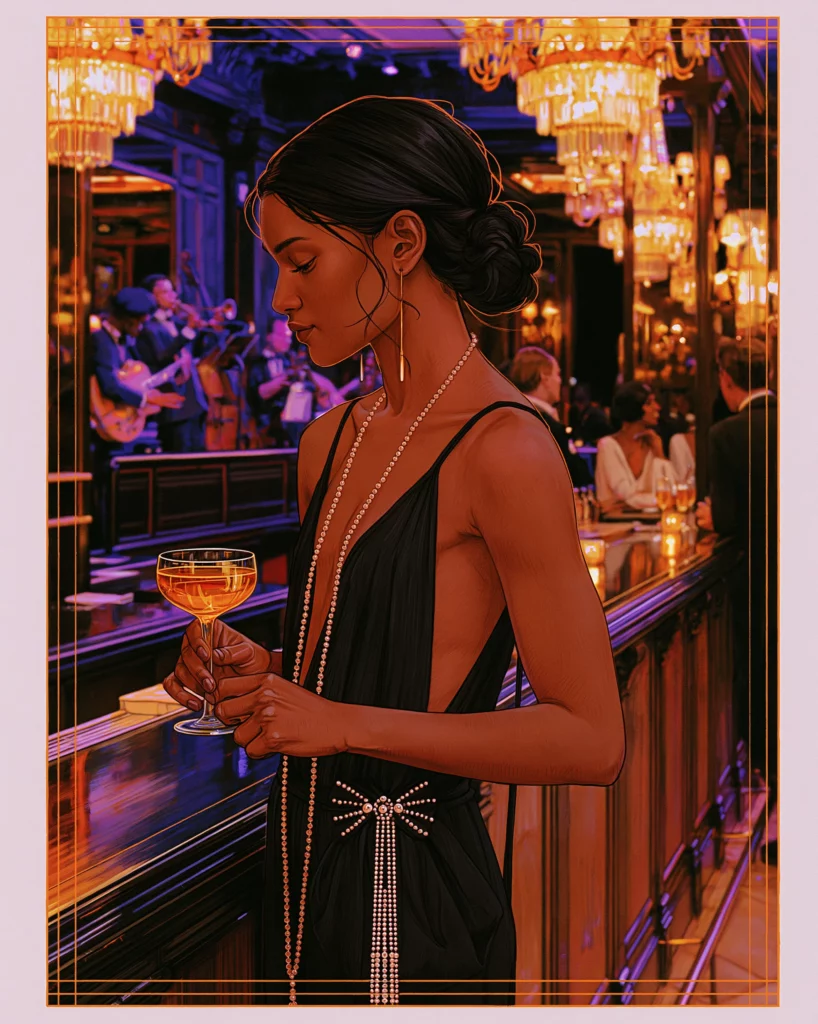
During the Roaring Twenties, dance occupied a central place in social life. The Charleston, fox-trot, shimmy and black bottom swept through cabarets, dance halls and ballrooms. In New York as in Paris, the body broke free from older conventions and adopted faster, freer movements.
Shoes had to follow this evolution. They became lighter, more flexible and more secure on the foot. Women particularly appreciated styles with straps across the instep or around the ankle, which stayed in place despite vigorous movement.
Women’s fashion also borrowed from menswear. The flapper adopted the Oxford and spectator shoe, preserving their graphic construction while adapting them to the female silhouette. Heels grew higher, while cutouts and perforations became more delicate.
On the dance floor, contrasting leather moves to the rhythm of jazz.
A Pattern of Geometry and Art Deco
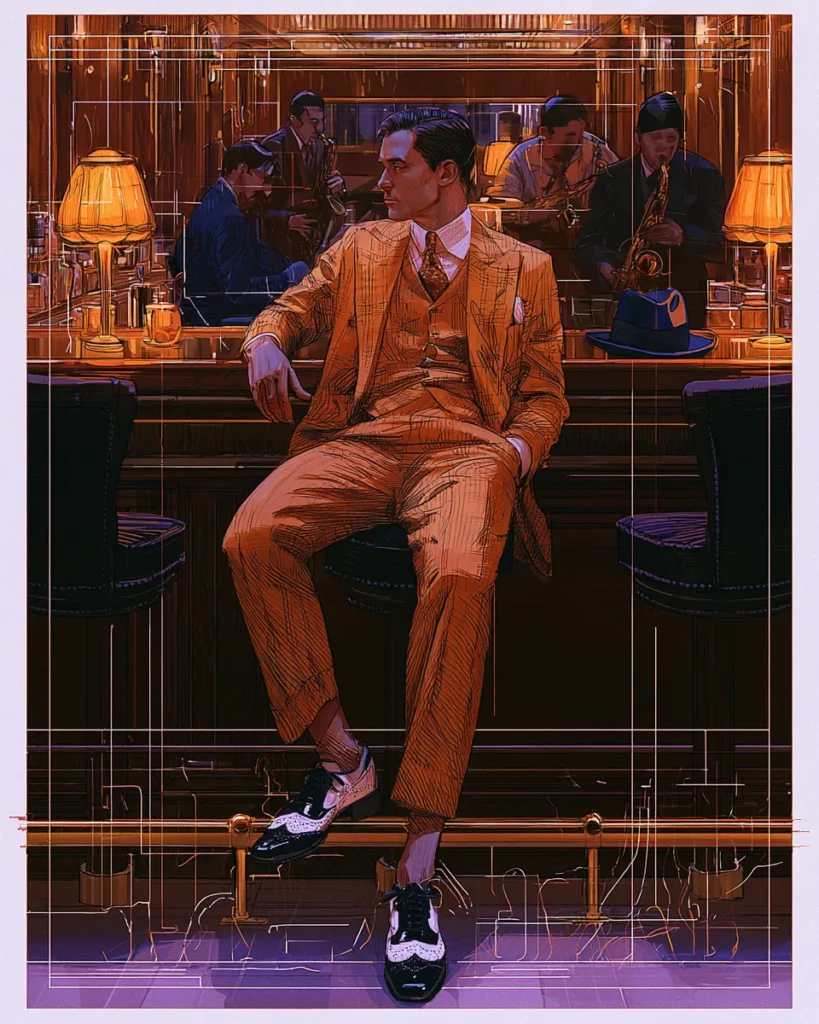
The two-tone shoe fit perfectly into the Art Deco aesthetic that flourished during the 1920s. Like the architecture, furniture and posters of the period, it favored clean lines, sharp contrasts and geometric compositions.
Different pieces of leather could form a wing over the toe, a wavy line along the sides or a series of decorative perforations. Contrasting materials mattered as much as contrasting colors: smooth leather with light canvas, patent leather with matte suede, solid panels beside perforated surfaces.
The two-tone shoe was never designed to disappear: every step became a statement of style.
In New York, these shoes belonged to the world of jazz, clubs and Broadway shows. They appeared on musicians, dancers and fashionable men. In Paris, they joined a style fascinated by speed, sport and influences arriving from the United States.
In both cities, two-tone shoes embodied a new elegance: less solemn, more mobile and decisively urban. Their design suited both outdoor leisure and nights spent in restaurants, grand hotels and jazz clubs.
TWO-TONE OXFORD
SPECTATOR SHOE
SPORTS DERBY
STRAP PUMP
Two-tone shoes crossed the decades without losing their graphic power. Regularly revived by fashion, they remain associated with jazz, dance halls and the elegance of the 1920s and 1930s. They should not, however, be confused with Gabrielle Chanel’s famous beige pump with a black toe, created much later, in 1957.
A legacy of the Roaring Twenties, the two-tone shoe evokes an era when fashion stepped into the street and onto the dance floor. More than an accessory, it became a way of moving forward with confidence, elegance and a slight taste for provocation.
Manhattan Paris
Discover other issues
The French Gazette