Why Did the United States Introduce Prohibition?
Protestant churches, women temperance activists and industrial leaders: how an unlikely coalition brought about the ban on alcohol.
A Century of Mobilization Against Alcohol
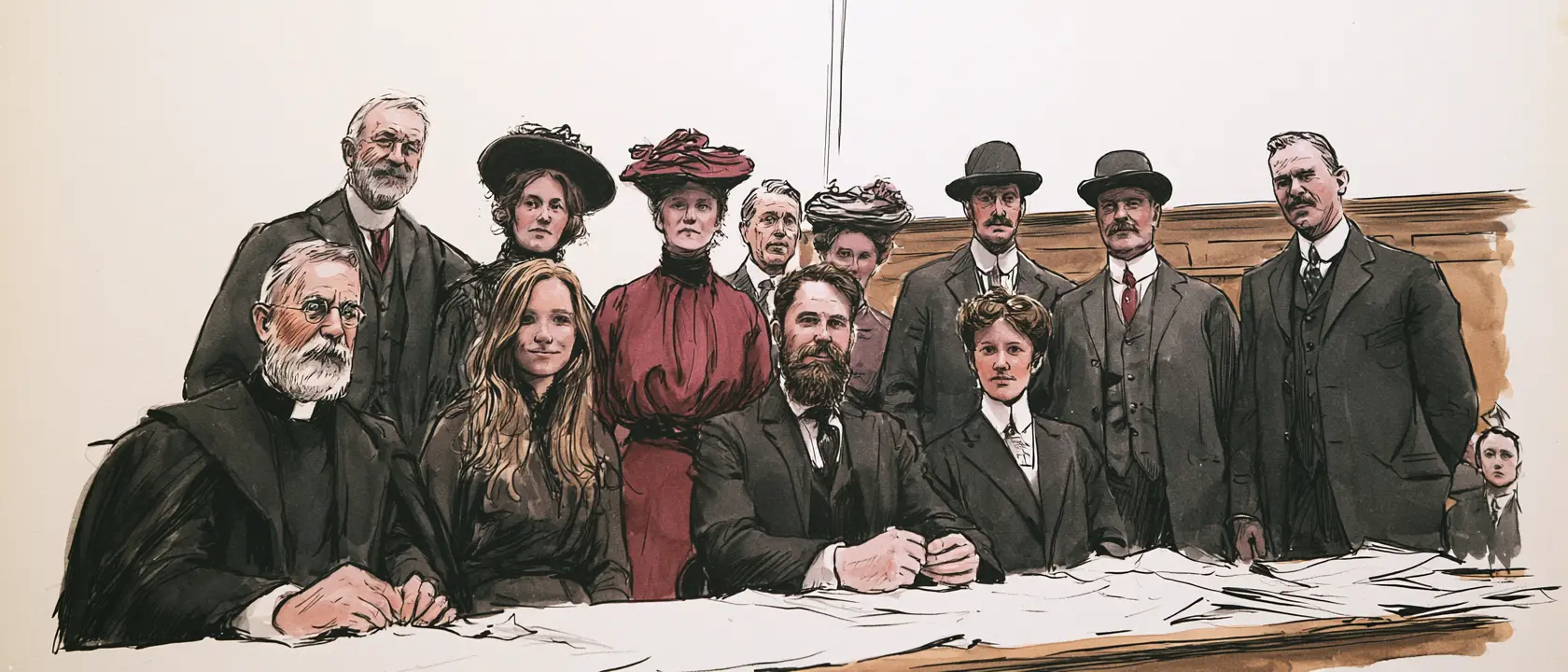
Prohibition did not emerge from a sudden decision by an America unanimously hostile to alcohol. It was the culmination of nearly a century of religious, social and political mobilization. Protestant ministers denounced the saloon as a breeding ground for moral corruption. Women saw alcohol as a threat to families’ physical and financial security. Some industrialists associated sobriety with discipline, punctuality and worker productivity. Finally, the Anti-Saloon League turned these different interests into a formidable electoral pressure machine.
On December 18, 1917, Congress proposed the Eighteenth Amendment. It was ratified by the states on January 16, 1919, and took effect one year later. It prohibited the manufacture, sale and transportation of alcoholic beverages, launching a nationwide experiment that would last until 1933. Prohibition was therefore less the triumph of a single ideology than that of a temporary coalition. Its members did not all pursue the same goal, but they shared a common adversary: the alcohol trade.
A Moral Crusade Led by the Churches
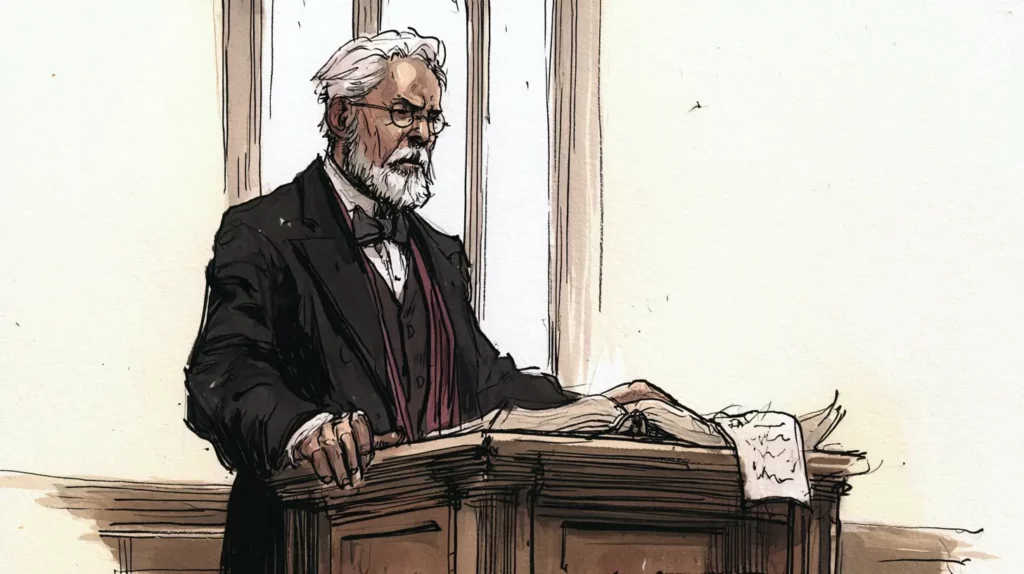
Long before the ban was written into the Constitution, temperance already occupied an important place in American religious life.
Beginning in the nineteenth century, many Protestant ministers portrayed drunkenness as both an individual and a collective danger. They argued that it estranged men from God, weakened their moral judgment and threatened family stability. The saloon thus became much more than a place to buy a drink: it was depicted as a gathering place for gambling, violence, prostitution and political corruption.
This outlook spread especially among Methodist, Baptist and Congregationalist communities, as well as other branches of reform-minded Protestantism. Sermons, public meetings and parish associations formed an established network across much of the country.
The Anti-Saloon League, founded in Oberlin, Ohio, in 1893, quickly recognized the power of this infrastructure. It did not seek to create a new religion or political party: instead, it used existing churches to spread its campaigns, raise funds and mobilize voters around a single objective. Its founder, the Reverend Howard Hyde Russell, envisioned it precisely as a movement capable of uniting American churches against the alcohol trade. The message was deliberately simple. Closing saloons would restore moral order, protect families and improve society.
Yet this crusade also had an identity-based dimension. Part of the movement set Protestant, rural and small-town America against urban populations of German, Irish or Catholic background, whose social customs were often associated with breweries and saloons. The campaign against alcohol thus reflected the cultural tensions of a deeply divided country.
Women Turn the Home into a Political Issue
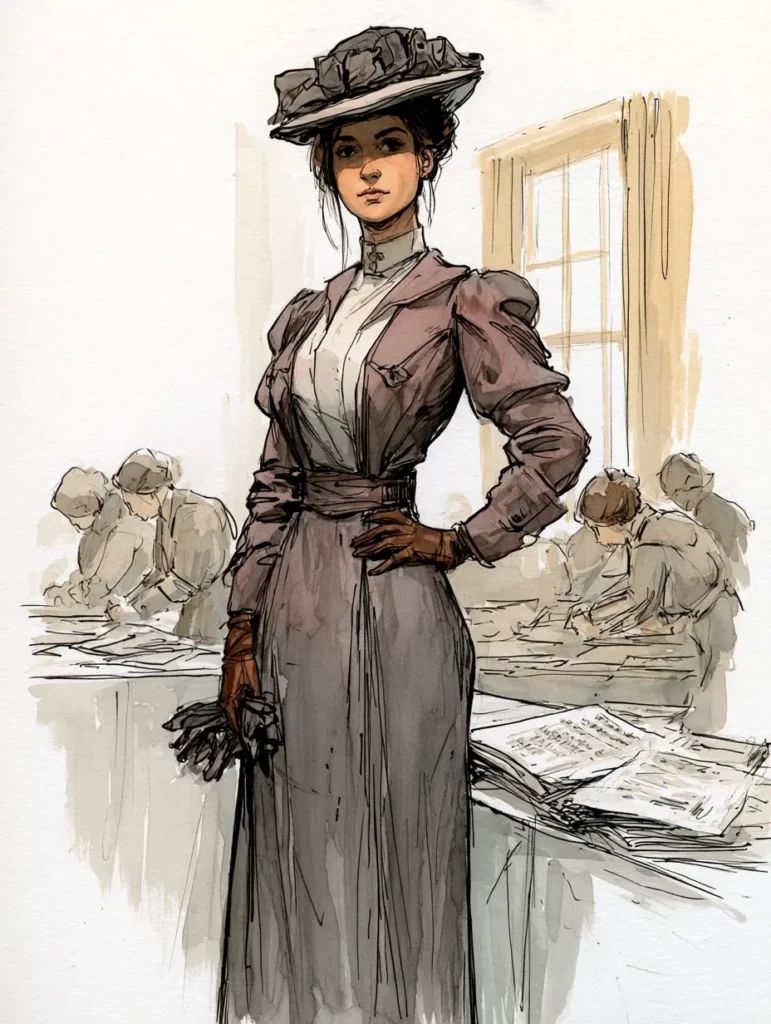
Women were not merely supporters of the prohibition movement. They were among its principal organizers.
Founded in 1874, the Woman’s Christian Temperance Union, or WCTU, became the largest women’s organization in the United States by the end of the nineteenth century. Its thousands of local chapters enabled women who did not yet have the nationwide right to vote to participate in public life, speak out, draft petitions and organize campaigns.
For these activists, the issue of alcohol was anything but abstract.
In a society where household finances were generally controlled by husbands, a father’s drunkenness could deprive an entire family of income. It was also associated with domestic violence and women’s insecurity, at a time when they had few legal or economic means of protecting themselves.
Temperance therefore became a policy of protecting the home.
This idea allowed activists to extend their traditional roles as mothers and wives into the public sphere. Since women were portrayed as the moral guardians of the family, they claimed the right to act against anything that threatened it.
Under Frances Willard’s leadership, the WCTU gradually expanded its work to education, prison reform, working conditions and women’s suffrage. The fight against alcohol became a gateway to much broader political participation.
Of course, not all American women supported prohibition. The women’s movement was neither uniform nor exclusively prohibitionist. But the WCTU gave the cause a local presence, social legitimacy and mobilizing power that male organizations could not provide on their own.
“Temperance therefore became a policy of protecting the home.
When Sobriety Becomes an Industrial Interest
Some factory owners therefore supported temperance, not necessarily because they shared all the ministers’ religious convictions, but because they believed a sober workforce would be more reliable and disciplined. The US National Archives explicitly notes the support that some industrialists gave to temperance campaigns.
Alongside the moral crusade and the protection of families came a more pragmatic argument: economic efficiency.
Industrialization profoundly changed the organization of work. Machinery, fixed schedules and assembly lines required workers to arrive on time, remain alert and endure long working days. For some business owners, alcohol consumption meant absenteeism, accidents and lower productivity.
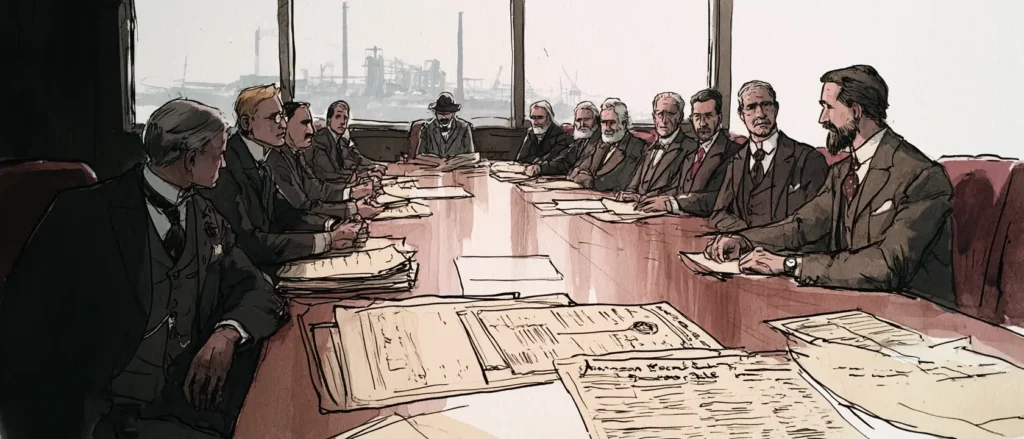
The saloon worried certain employers for another reason as well. It was a place where workers socialized and where political, trade-union and reformist ideas circulated. Restricting its influence could therefore seem a way to control not only drinking habits but also workers’ collective organization.
Finally, the campaign attracted substantial financial backing. John D. Rockefeller Sr., an industrialist and Baptist philanthropist, was among the Anti-Saloon League’s donors. His support illustrates the links that could exist between religious conviction, philanthropy and economic power.
It would nevertheless be misleading to portray the business world as a uniformly prohibitionist bloc. Brewers, distillers, restaurant owners and many urban entrepreneurs opposed the ban. Even some early supporters, including John D. Rockefeller Jr., would eventually call for its repeal after witnessing the consequences of enforcement.
Industrial support was therefore real but limited. This was not a centralized conspiracy: several distinct interests temporarily converged around the same policy.
“Industrial support was therefore real but limited.
The Anti-Saloon League Turns a Cause into a Political Machine
The churches provided networks. Women supplied grassroots mobilization. Some business circles contributed money and economic arguments. But none of these forms of support was enough, on its own, to change the Constitution.
The movement’s real political strength lay in the Anti-Saloon League. Unlike the Prohibition Party, it did not seek to win power directly. It worked within the existing parties and judged candidates on a single question: did they support banning alcohol or not?
“It was also the extraordinary ability of its supporters to turn a moral conviction into electoral discipline.
A politician could be conservative or progressive, Republican or Democrat. If they voted with the League, it might support them. If they opposed it, the League mobilized its networks against them.
This strategy reduced a complex social issue to an immediately understandable electoral choice. The League published newspapers, distributed pamphlets, organized lectures and informed voters of candidates’ positions. It became a major propaganda and lobbying organization, capable of producing millions of pages of publications.
In 1916, with the backing of the WCTU and other pro-temperance forces, it helped elect the qualified congressional majorities needed to submit a constitutional amendment to the states. Prohibition’s victory cannot therefore be explained by the popularity of the idea alone. It also reflected the extraordinary ability of its supporters to turn a moral conviction into electoral discipline.
War Opens the Final Window of Opportunity
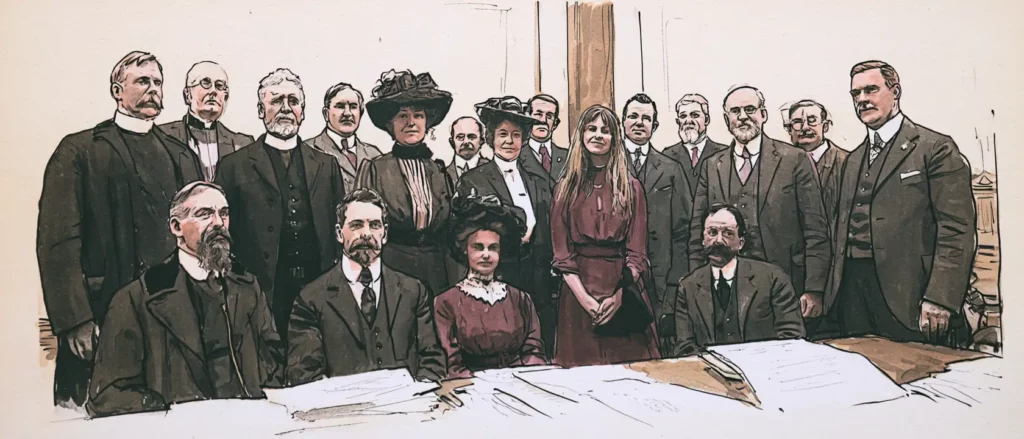
When the United States entered the First World War in 1917, the prohibition movement had already existed for decades. The war did not create it, but gave it a decisive political opportunity.
In a mobilized nation, sobriety could be presented as a patriotic act. Grain used to produce alcohol, the argument went, would be better spent feeding soldiers and civilians. Drinking became a form of waste at a time when the nation was demanding sacrifice.
American breweries, many of them linked to families of German origin, also suffered from the anti-German climate. Prohibitionists exploited this hostility, sometimes associating beer and its producers with the enemy. The Anti-Saloon League thus used the wartime context to reinforce arguments it had long been making.
By then, the movement had brought together almost all the conditions it needed:
- a moral justification supplied by the churches;
- grassroots mobilization organized by women;
- support from part of the economic elite;
- a lobbying machine capable of influencing elections;
- a wartime climate favorable to sacrifice and discipline.
Congress passed the resolution proposing the Eighteenth Amendment in December 1917. The three-quarters of states required for ratification were secured in January 1919. Nationwide Prohibition officially began on January 17, 1920.
“The war did not create it, but gave it a decisive political opportunity.
A Coalition, Not a United America
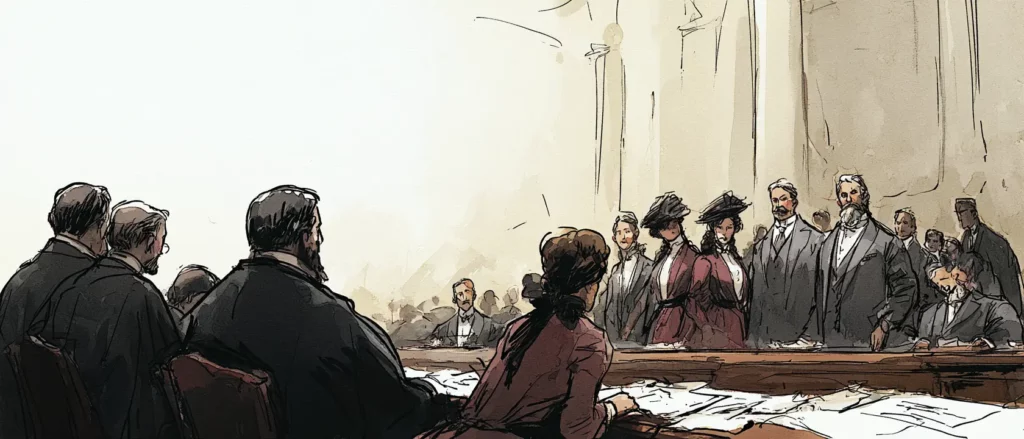
Prohibition became possible because very different groups succeeded in making alcohol the common culprit for problems that were, in reality, far broader. For ministers, it threatened morality. For activists, it endangered the family. For some industrialists, it undermined workplace discipline. For political reformers, the saloon symbolized corruption in cities and political parties. The Anti-Saloon League turned these concerns into a national strategy, and the First World War then provided the political conditions for its victory.
But this victory did not mean that all Americans wanted to stop drinking. Many workers, immigrants, big-city residents and members of Catholic or Jewish communities instead regarded the ban as an attack on their customs and freedoms. Prohibition therefore took effect in a nation that was already deeply divided.
This contradiction explains what happened next: the law could eliminate the legal alcohol trade, but it could not eliminate the desire to drink.